
Intelligent Workspace
Management System
Improving Employee Comfort Through Intelligent Environmental Monitoring & Adaptive Ventilation
We developed a distributed embedded IoT platform that transforms conventional office cabins into intelligent workspaces. Each cabin is equipped with an Intelligent Workspace Node that continuously monitors environmental conditions and autonomously regulates ventilation, while a centralized Workspace Gateway provides real-time monitoring across the entire facility.
Every Workspace Is Different
No two office cabins experience the same environmental conditions. Occupancy, electronic equipment, airflow, and outdoor weather continuously influence temperature, humidity, CO₂ concentration, and indoor air quality throughout the day. Traditional HVAC systems treat every workspace the same, operating on centralized control or fixed schedules that cannot adapt to these localized changes. As a result, organizations often face inconsistent employee comfort, reduced workplace productivity, and unnecessary energy consumption. Creating a healthier and more efficient office environment requires continuous monitoring, localized decision-making, and intelligent ventilation tailored to the unique conditions of each workspace.
Giving Every Workspace Its Own Intelligence
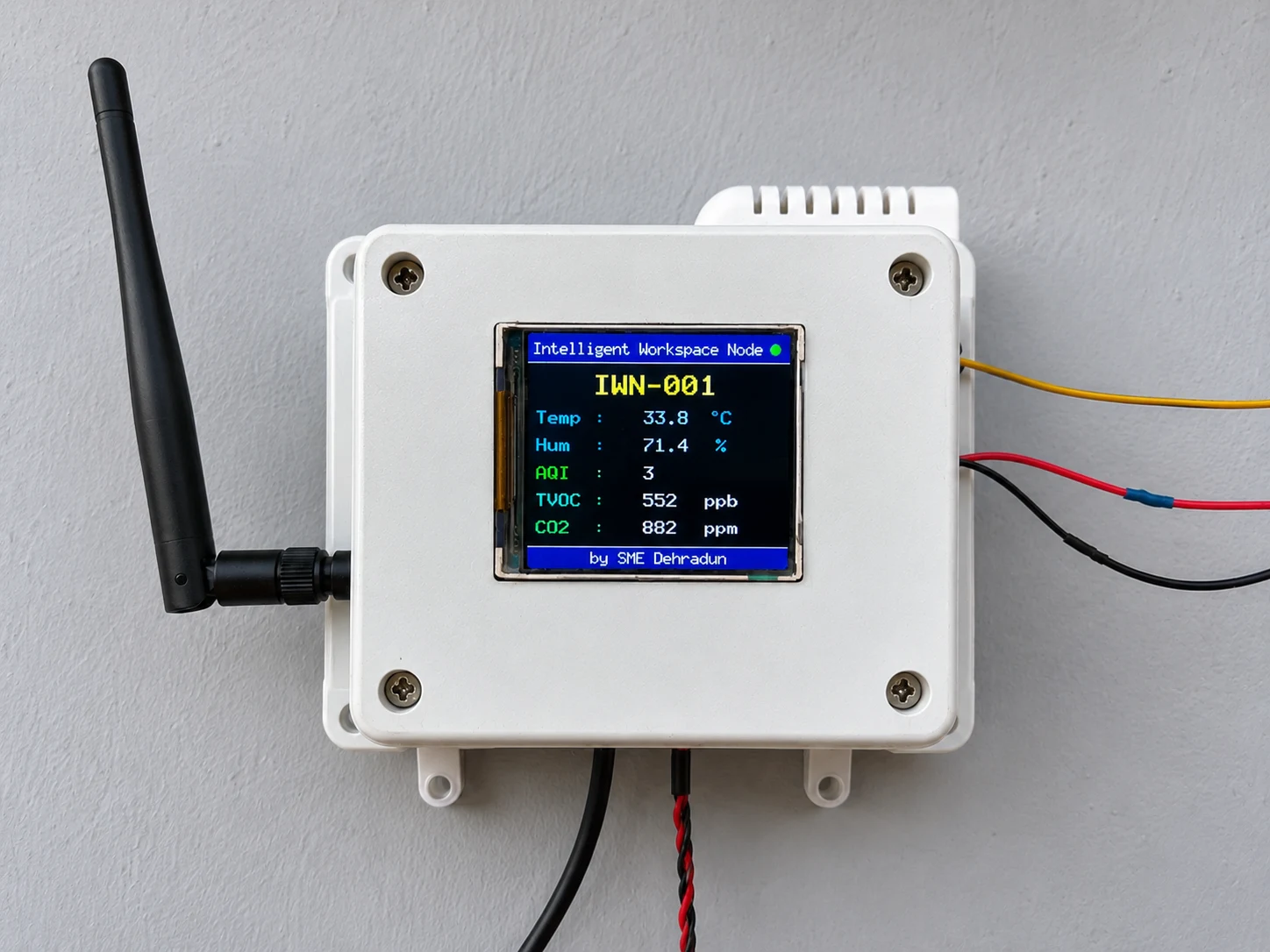
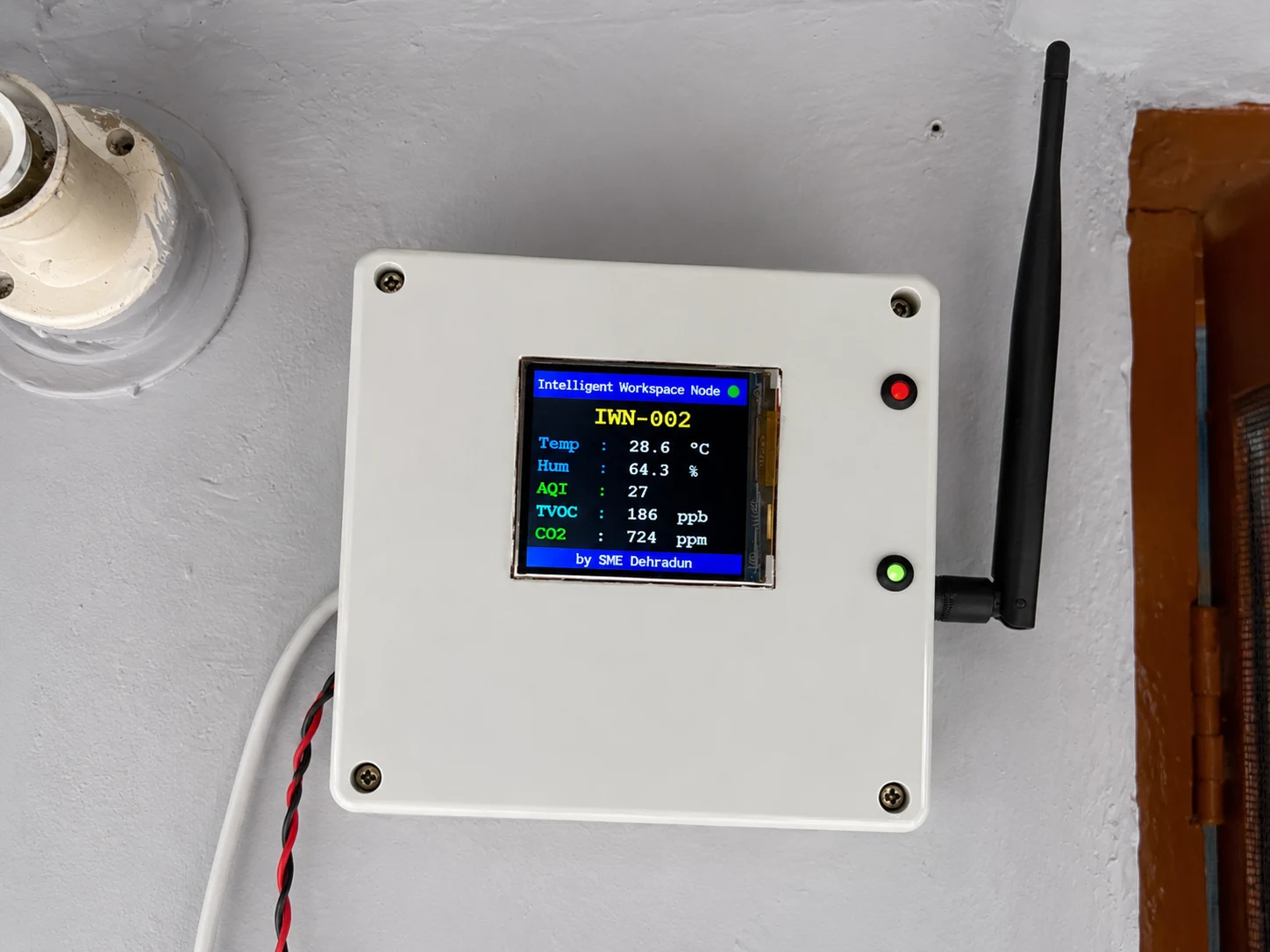
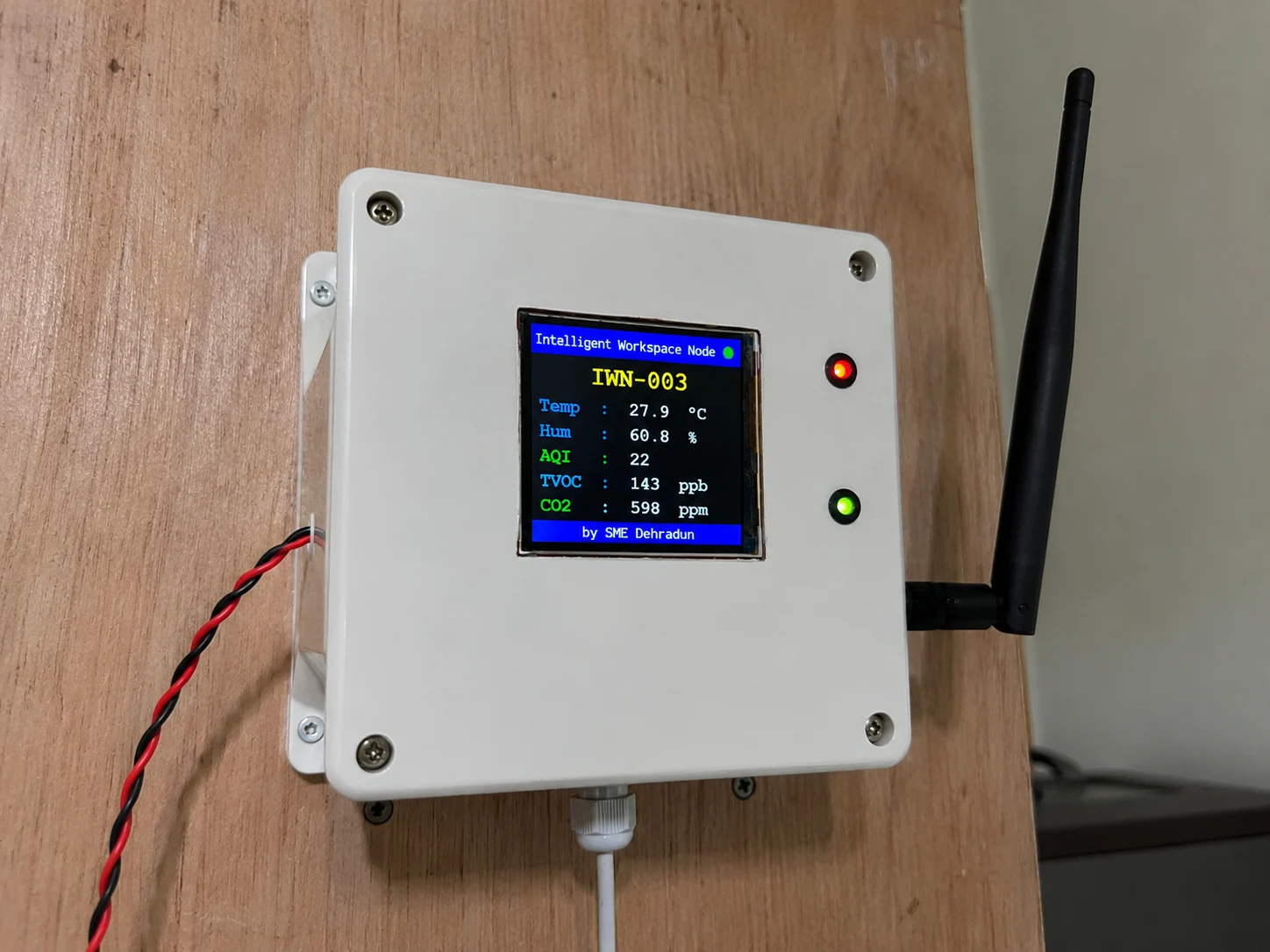
To address these challenges, we developed the Intelligent Workspace Management System, a distributed embedded IoT platform designed specifically for modern office environments. The system consists of Intelligent Workspace Nodes (IWN-001 to IWN-010) installed inside individual office cabins and a centralized Workspace Gateway (IWG-001) that supervises the entire network. Each workspace node continuously monitors environmental conditions, analyzes sensor data locally, and autonomously regulates ventilation to maintain a comfortable indoor atmosphere. Through a reliable LoRa wireless network, every node reports real-time environmental data to the gateway, enabling centralized monitoring while preserving independent control within each workspace.
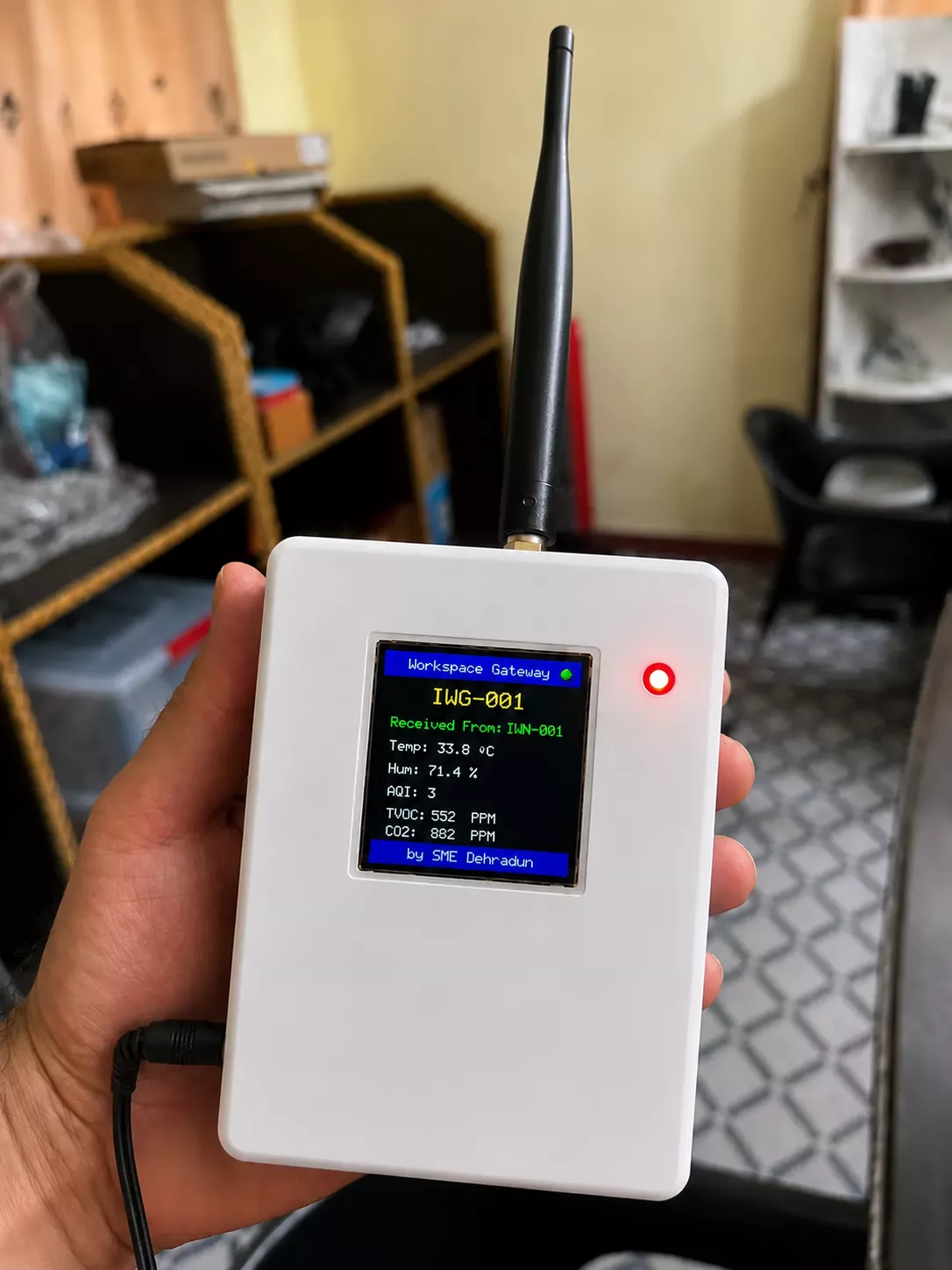
IWG-001
LoRa Hub
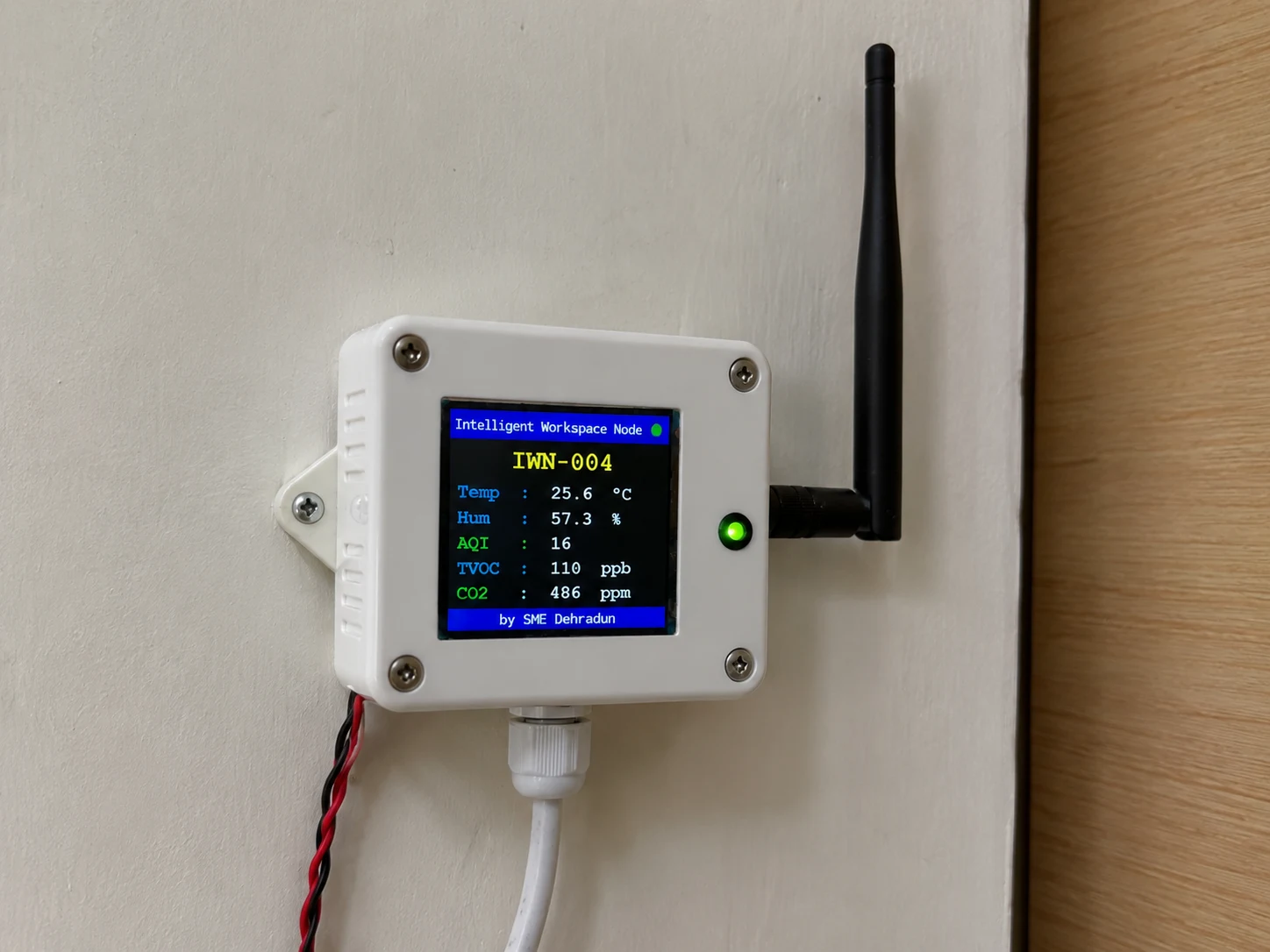
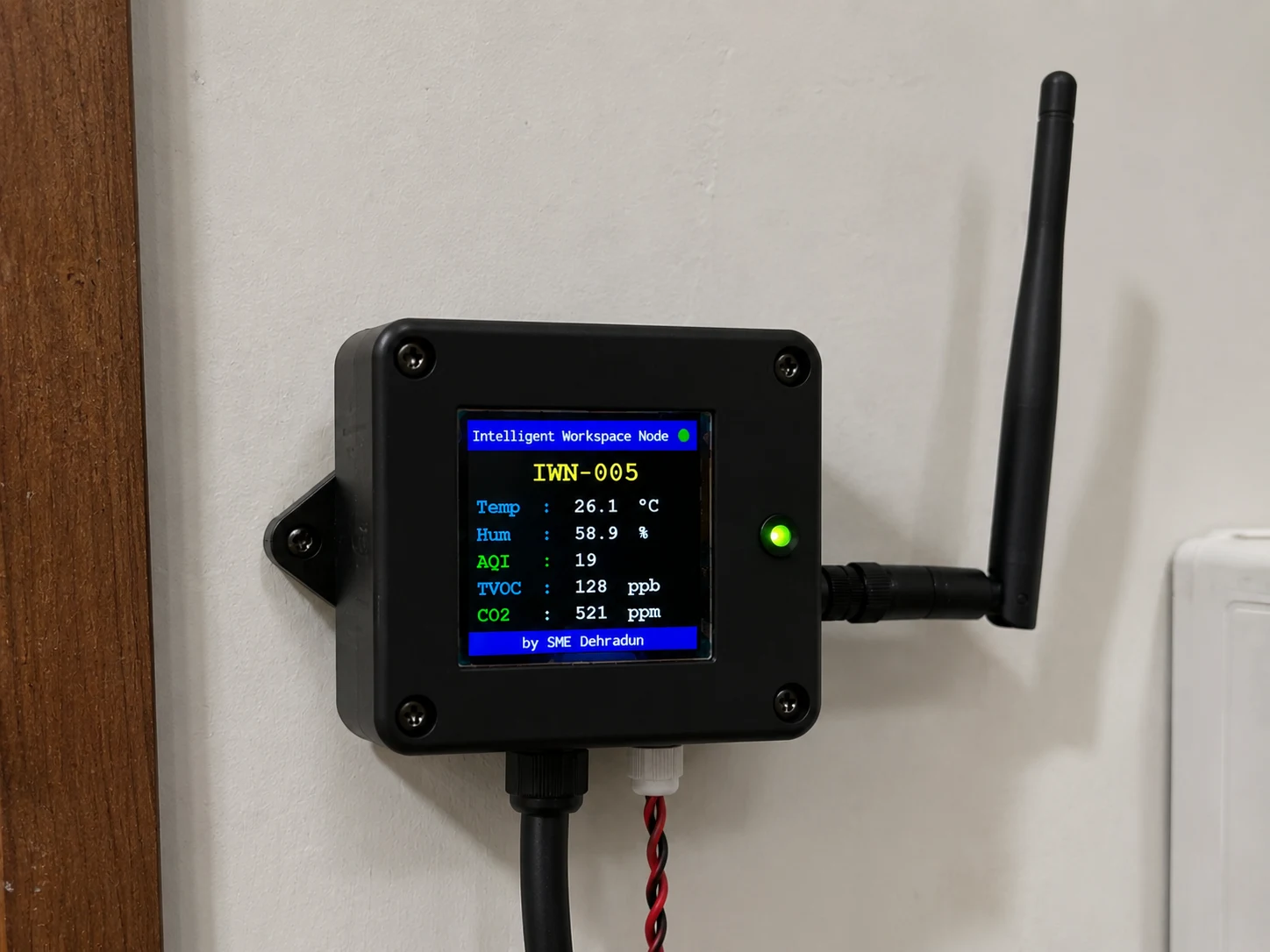
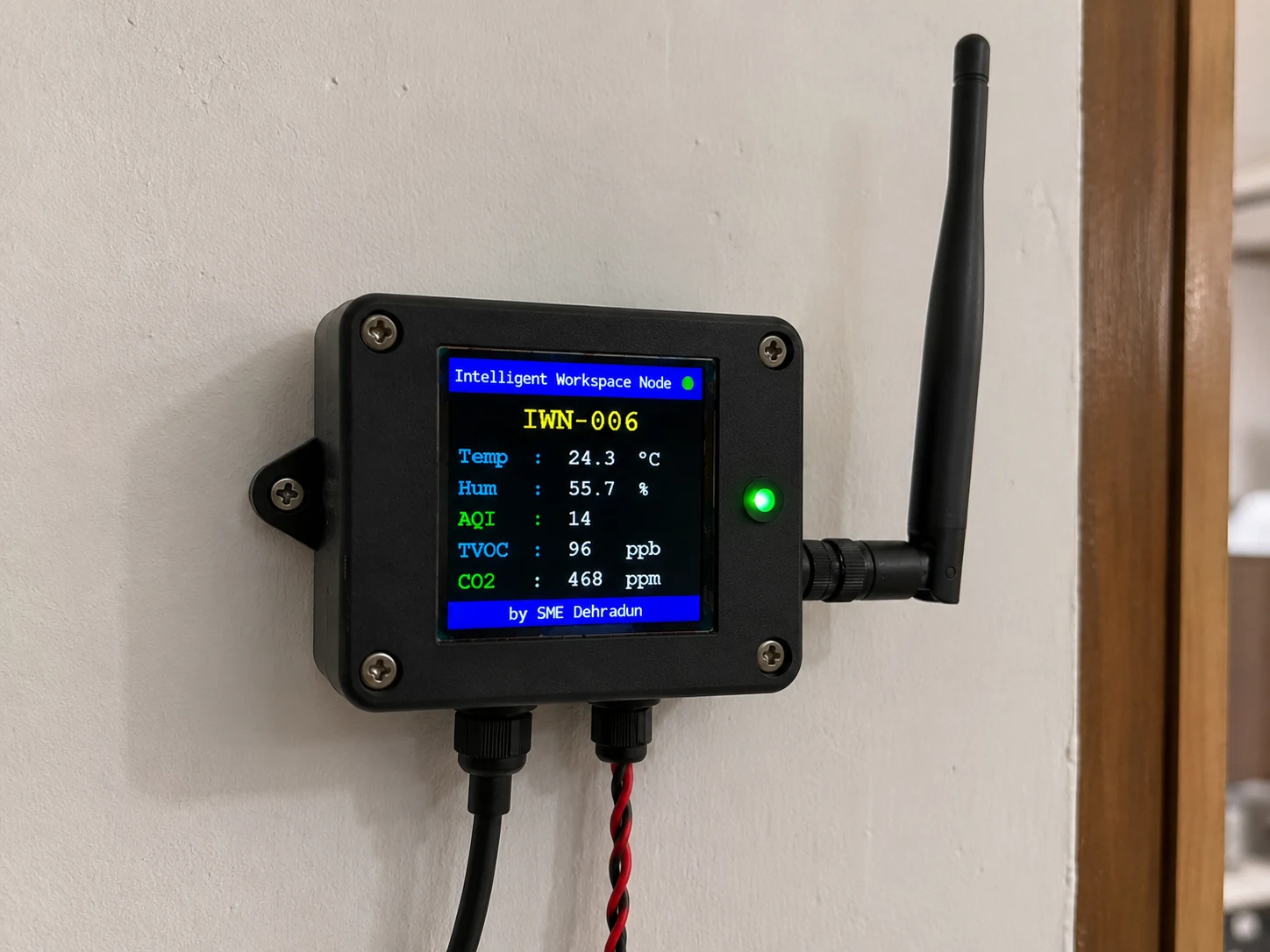
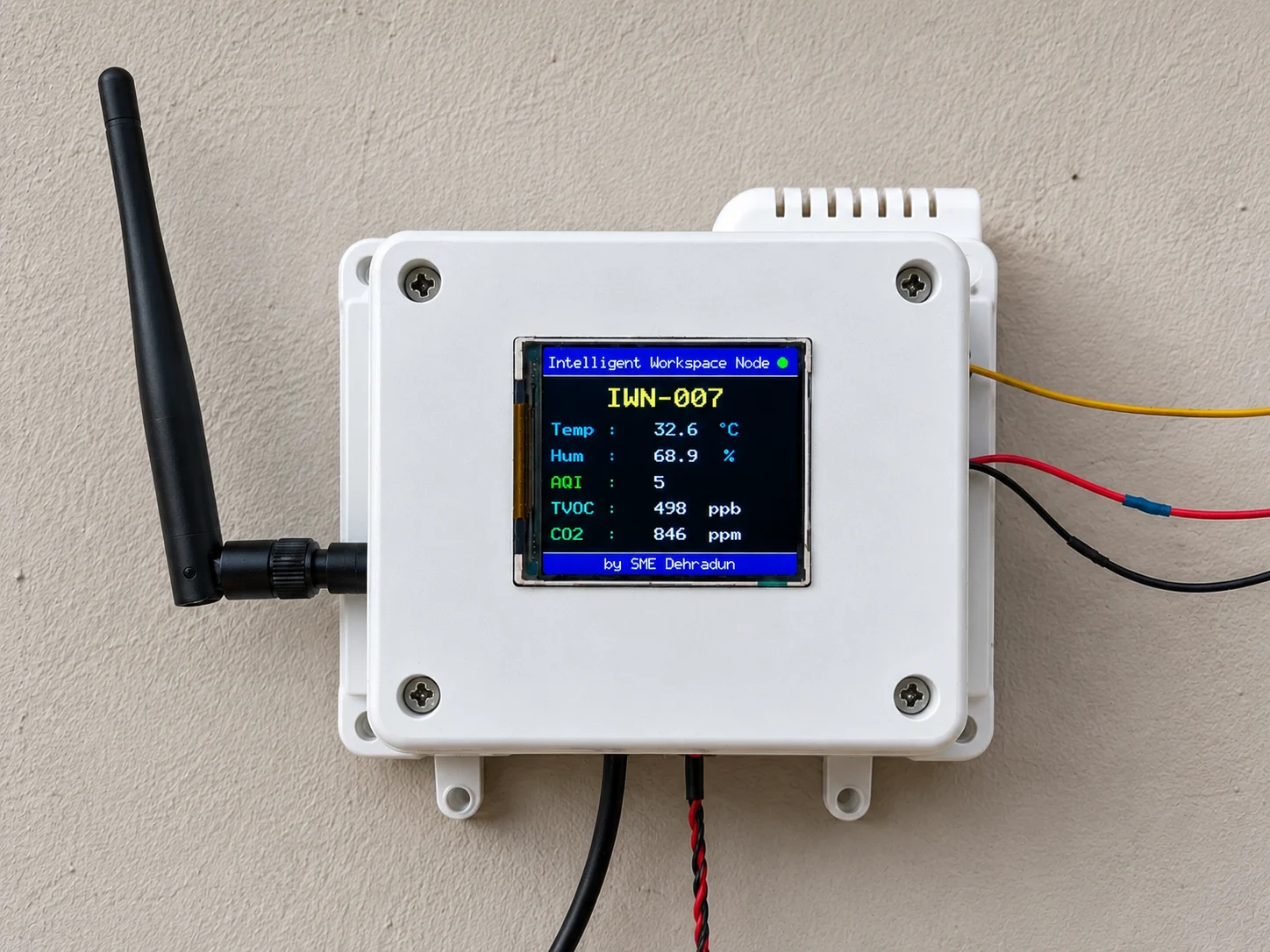
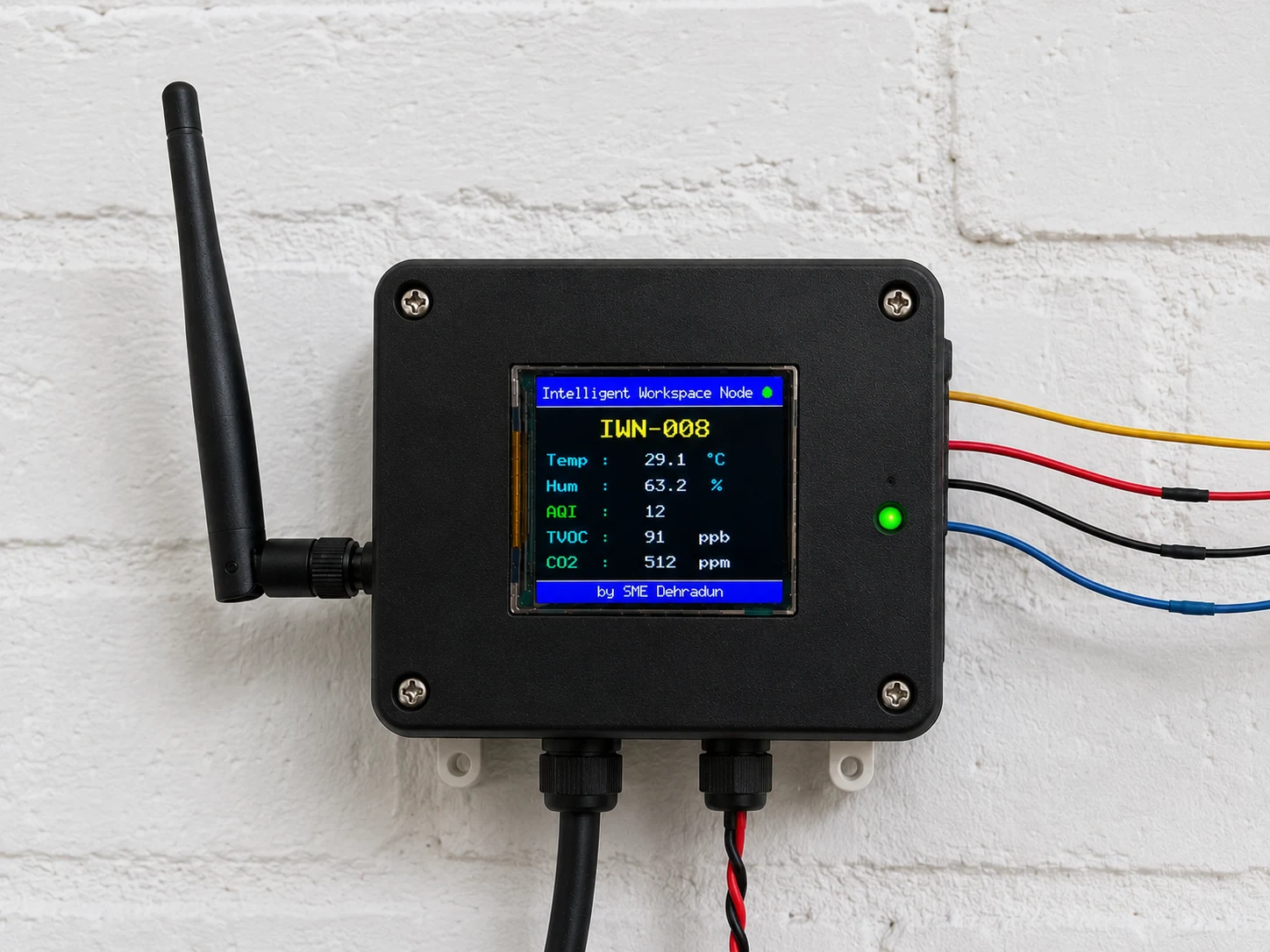
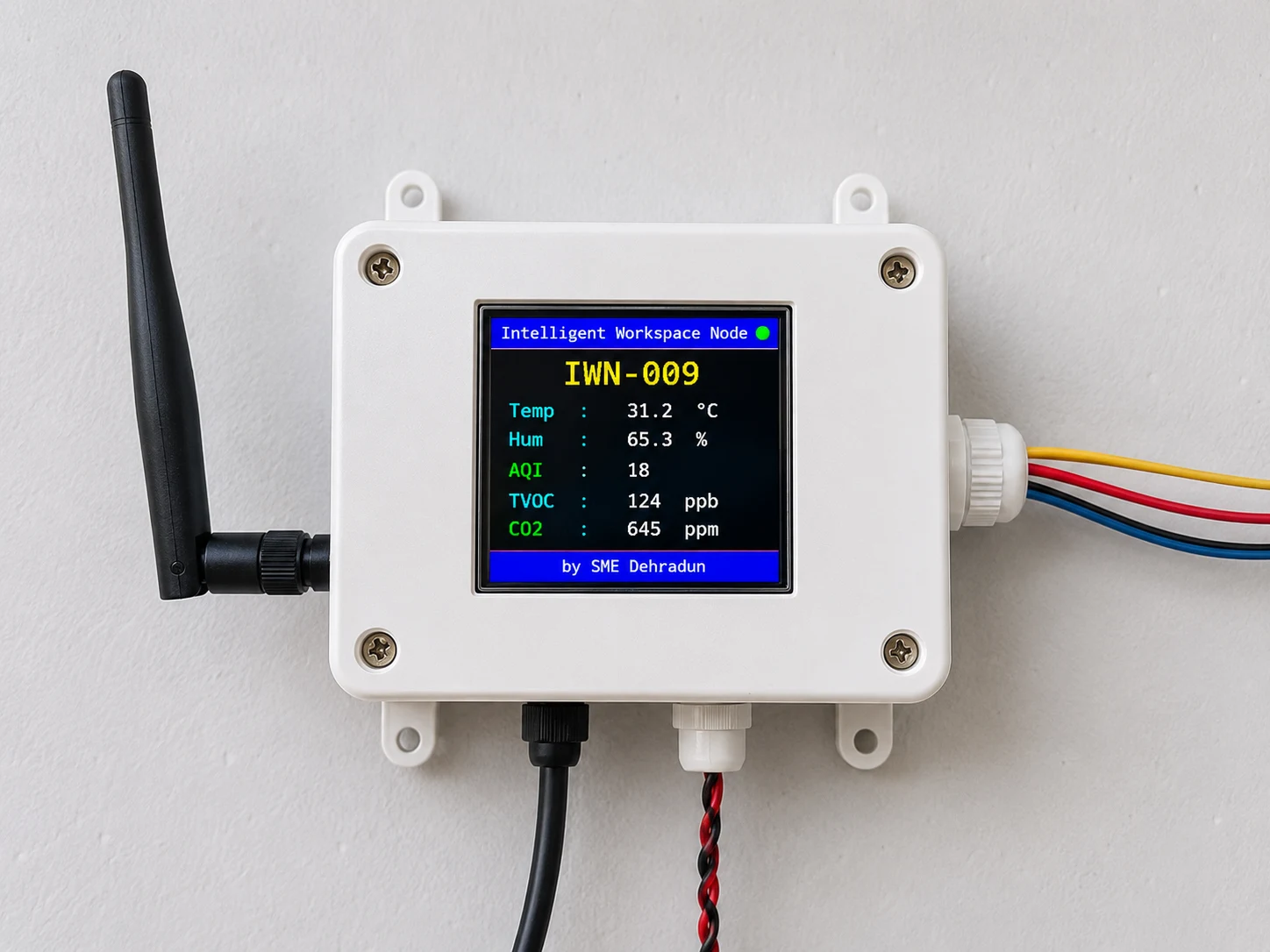
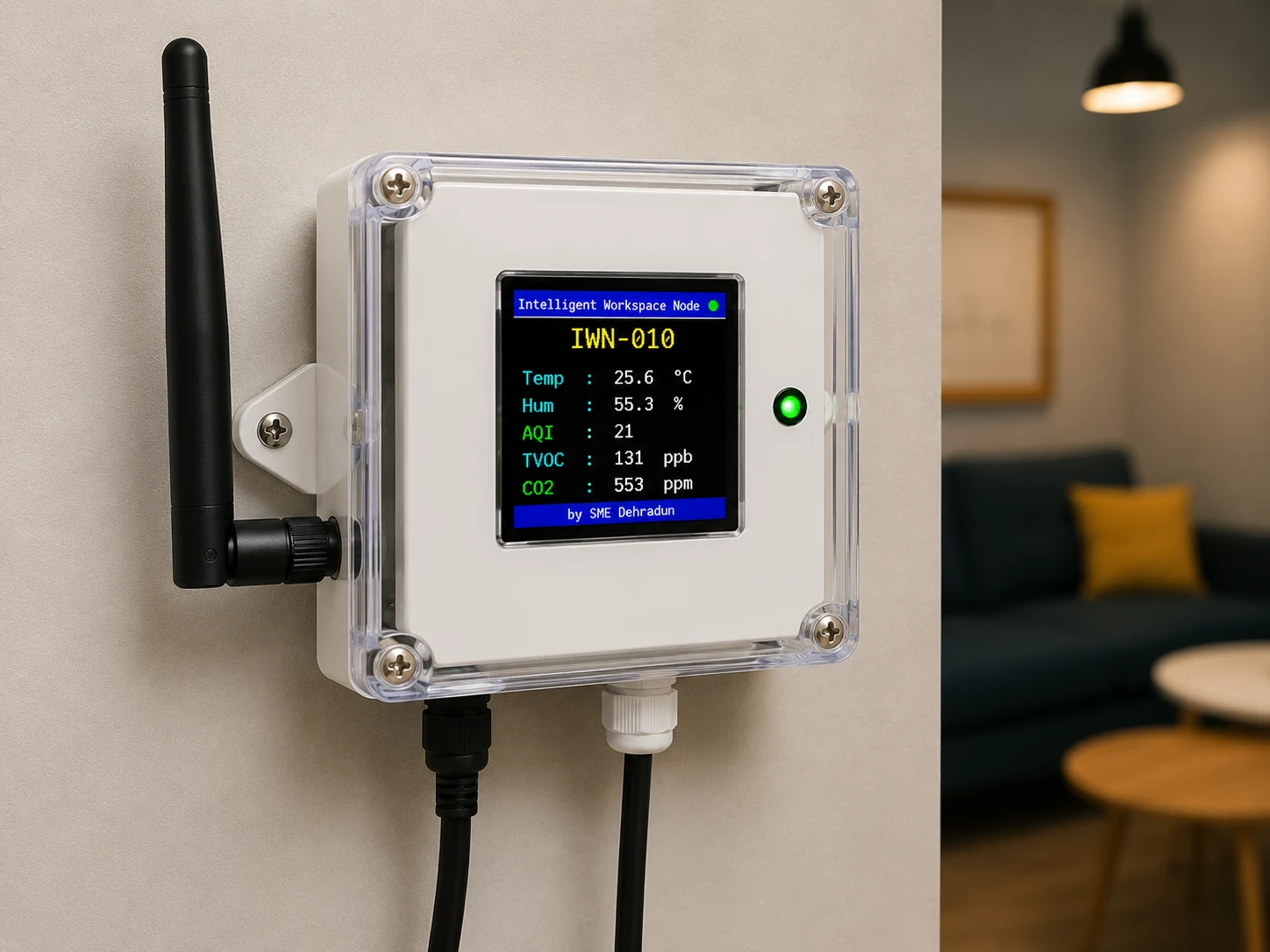
Smarter Workspaces. Better Comfort. Greater Efficiency.
The Intelligent Workspace Management System continuously monitors environmental conditions across multiple office cabins and autonomously regulates ventilation based on real-time data. By combining distributed embedded intelligence with centralized monitoring, the platform creates healthier workspaces, improves occupant comfort, reduces manual intervention, and provides a scalable foundation for future smart office automation.
Workspace Node
Central Gateway
Workspace Node
Intelligent Monitoring for Every Workspace
Continuously tracks environmental conditions within each office cabin to provide real-time visibility into workspace health.
Adaptive Ventilation
Automatically adjusts ventilation based on live environmental data to maintain a comfortable indoor environment.
Improved Employee Comfort & Wellbeing
Creates healthier workspaces by maintaining optimal air quality and thermal comfort throughout the day.
Centralized Monitoring, Distributed Control
Combines autonomous local decision-making with centralized supervision for efficient workspace management.
Reliable LoRa Communication
Enables dependable long-range wireless communication between workspace nodes and the central gateway.
Modular & Scalable Architecture
Designed to support additional workspaces and future smart building integrations without major redesign.
Built for Today's Offices. Ready for Tomorrow's Smart Buildings.
The platform demonstrates how distributed embedded intelligence can transform conventional office environments into responsive and energy-efficient workspaces. Its modular architecture allows organizations to expand monitoring across additional workspaces while providing a future-ready foundation for AI-driven analytics, cloud connectivity, and smart building integration.
Designed for the Future
Built on a modular and scalable architecture, the Intelligent Workspace Management System is designed to support future enhancements and seamless integration with next-generation smart building technologies, including:
These future capabilities provide a strong foundation for developing fully autonomous, intelligent workplaces that enhance employee comfort, improve operational efficiency, and reduce energy consumption.
